
I Am a Layman
And by gum it! It matters!

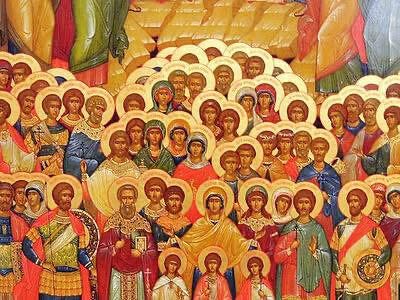
There has been some buzz in my circle these days concerning the role parishes play in the spiritual lives entrusted to the Church. It’s a question that has been forefront in my own mind for a long time; one that needs to be addressed in all seriousness. These are my own thoughts on the matter; mostly set down to remind myself anew of my duties as a layman, my role in the Church, and the way I view priests and other clergy and religious.
From an early age we have memorized this sentence from the catechism which has its own beautiful rhythm when said aloud, reminding us that the Church is rightly ordered, yet blooming profusely: “Christ gave the power to teach, to sanctify, and to rule the members of his Church to the Apostles and their successors the bishops.” And further, parish priests “assist the bishops in the care of souls.” This care of souls is lived out within the context of each particular parish’s life - or should be. The role of a parish, then, is to create an atmosphere that supports and facilitates those three sacred duties laid solemnly upon the heart of every Pastor by Holy Orders : to teach, to sanctify, and to rule his given flock - the flock assigned to him providentially by his Bishop and not by his own choosing.
The “flock” has its own particular duties and commands as well. Through Baptism and Confirmation, each individual member of the Church becomes a King, Prophet, and Priest to his or her own soul. To practice a kingly rule over our own sinful nature through grace, to spread the Gospel to the greater world, and to offer our personal works, joys, and sufferings, which are laid under the hands of the priest at the offertory of every Mass we attend, a pleasing sacrifice to the Father. This is our special duty as laymen conferred on us by the Triune God Who created us; to be His voice to all the world. This is a solemn duty. We matter. And greatly. Not in a prideful, demanding-of -attention kind of manner, but in a deeply humble way that accepts the greatness; a greatness that demands we be fully human and not a slave. For we are no longer slaves, but sons and daughters and heirs with Christ. US. ALL OF US. We are called to so much more than being a mindless, faceless, uneducated rabble that is simply asked to “pay, pray, and obey” - a little saying that makes me growl inwardly because it became a kind of habitual assumption among the clergy and religious in the Church of not so very long ago.
Given this dignity conferred on us as laymen, we are responsible for knowing, learning and deepening our faith. We are personally responsible for seeking the truth and living by it. That is not a duty we can give to another. I think in the past we surrendered much of that responsibility and left it up to the pastors and priests to just ‘tell us what to do’. That, it seems to me, was very wrong and led to much confusion and error. It gave priests far too much power and clout, and with much power comes pride and clericalism; a being set apart as unique and special for all the wrong reasons; an attitude that smudges the meaning of ‘servant’ and replaces it with ‘despot’. All sorts of terrible things emerged out of this mindset in the past: a laity that did not truly know their faith, a laity afraid or reluctant to question their priest because of his authority. This sort of fear sometimes even led to physical, emotional and sexual abuse by many a priest because the laity had grown too accustomed to thinking they were not allowed to question priests or to confront them given the hierarchy of authority. This is a slavishness that has no place in the Church. Priests are not to be praised and adored and constantly deferred to - that is to be reserved for Christ. They are servants, not kings. But they ARE to be depended upon, and even expected to serve the needs of the laity. One might say they are the servants of the servants of God and we are to be grateful for them.
The call of Vatican Council II (given all its warts and failures and false starts, I admit) was nonetheless a rather stringent, painful but necessary wake up call to the laity to stand up and be Catholic on their own two feet. To profess the faith in the public square and through the example of their family lives, their fairness in business practices, their correct Theology in classrooms, their ethics in Medicine. All the saintly Popes after the Council preached it endlessly. The laity matter. The laity matter for the successful mission of Christ in the world. The Information Age has really helped with this. Where once the laity had to depend more on their priests and pastors for information, they can now have ready access to any encyclical, any teaching, myriad saint books, and catechisms. They have no excuse to blame their ignorance on any priest that comes along. They are responsible for their OWN actions. This knowledge strengthens them and can be an efficacious challenge to the priests in a parish who will now need to be at the top of their intellectual game. They will not so easily be able to do or say anything they want and expect to be obeyed. A well informed laity brings mutual respect.
But to exercise this responsibility the laity need grace - and a lot of it. That is where the Pastor, priests and parishes come in. The Pastor is there to TEACH. He should preach the Gospel and interpret it for his flock in good, short, solid sermons. They don’t need to be fabulous jewels of oratorical skill; just short, direct, simple, and practical. It seems to me he should also offer catechism classes to the adults in his parish. The thread of Church teaching was lost for years after the Council - it needs to be taken up again to make up for lost time. Discussing the catechism with his parishoners as a weekly priority, would give them the confidence to do further reading and to learn how to think things through. It would also give them the sense that this is important enough for the pastor to take time to teach them how to make the faith their own. My years as a PSR instructor have shown me that there is colossal ignorance about the basic teachings of the Church. Pastors don’t need fancy programs with bells and whistles. They need a catechism and a Bible, perhaps 1 hour on Sundays, and some intellectual elbow grease.
The Pastor is there to also SANCTIFY. He needs to commit to praying a beautiful, reverent, slow paced Mass (no matter the rite) with all care and attention. He needs to train up his altar servers to understand what they are about and he needs to demand that they commit and show up when it is their turn. He needs to stress that this is a duty, but also a privilege. His seriousness will put a fire in their young hearts and teach them to be careful and even awed by what they are doing. He absolutely sets the tone. The laity should be able to come to Mass on Sundays and even on weekdays and find the strength and consolation they will need out in the world. The priest has a duty to explain the Mass to them. Monsignor Ronald Knox wrote a whole book of sermons given to school girls explaining the beauty of the Mass and their vital role in it. Vestments, flowers, altar linens, chalices - all should be as beautiful as the parish can afford. We are all changed by beauty. We are called to attention by it. A Pastor and his assistants must preserve the mystery by their tone, their actions, and their seriousness. The laity should be able to witness their Pastor’s belief in, and tenderness for, the Holy Eucharist by how he says the Mass.
But not only the Mass sanctifies. Pastors must hear Confessions at times that people can actually get there. And a Pastor needs to seriously make time to study (far beyond his time in the seminary) how to counsel the doubtful, to exhort sinners, and to give them concrete advice. This means he has to know their challenges as fathers, husbands, and sons. He needs to understand what families are going through. His advice must be plain, doable, challenging, but filled with understanding. I have often felt like I knew more than the priest confessing me and that I could probably have counseled HIM. It is a very depressing feeling. I hate that feeling. I longed for a Father who was wise, well informed, and confident in the teachings of the Church. I have met a few. But there needs to be so many more!
A pastor needs to make the Eucharist available to his flock in adoration, in Eucharistic processions, in taking time out to personally bring the Eucharist to home bound parishioners and those in hospitals. He personally should do this even if this isn’t so much in his ‘wheelhouse’ so to speak, or if he feels awkward. The diocesan priesthood is a call to serve the people of God, even those who are homebound and lonely for Mass. If he comes to them, cheerful and kind, they will know he is their father and cares about their sanctification even in their loneliness and pain. He is the Father’s care “in persona” for them - bringing the best of all medicines - Jesus - to them. This is a duty he should not delegate to a parishioner.
The Pastor needs also to RULE. Not like Caesar from on high, but gently and firmly. He needs to tell his parishioners that it is a mortal sin to miss Mass on Sundays (you would be surprised how many people don’t know this - and how many pastors are too afraid to tell them). He needs to preach and teach and offer classes on NFP in his parish for all couples preparing for marriage, and he needs to emphasize publicly the harm caused by the mortal sin of birth control. He needs to defend the teachings of the Church on marriage - not like a tyrant but through his example: living out his own celibacy with joy and sacrifice. Giving his ready understanding to wives and husbands that, indeed, some of these teachings are blooming hard and counter strange in the world, but they bring amazing graces. Celibacy and openness to children are surprisingly tandem sacrifices - both difficult, both incredibly filled with self giving and grace. In living out the courage of his celibacy, a priest can give us an example of courage that we in turn, might have the courage to be open to children. The priest needs to assure us of his prayers and needs to pray WITH us in the Mother of Perpetual Help Devotions, the Stations of the Cross, the Divine Mercy prayers. He needs to show us we are all in this together and he is our loving father.
This may seem a tall order. Many in the Church are saying that there is just too much of a burden layed upon a priest in our modern world: he needs to be janitor, builder, teacher, accountant and CEO, priest and confessor all at once - well, yes! Husbands and fathers do it all the time. Some Dads work 50 hour weeks, come home to take care of their kids with their wife every. single. night. They mow the lawn, fix the drywall that was broken by a flying baseball, take time to listen and play with their children, pay the bills, do the taxes, and try to faithfully carve out a prayer life. And I won’t even bring up the myriad duties of a wife and mother that need to get done before she lays her head on the pillow at night. The laity are not asking more of Pastors than is being asked of them out here in the world.
The parish is the place where we get our strength and our grace. That is what parishes are for. They house the servant who is sent to teach, to sanctify and to rule his parish so that the laity can do their job of bringing Christ to the world. Anything else is icing on the cake. Too many extra activities at parishes take away time from family life.
Priests need to respect their parishoners as thinking, choosing beings, in some cases beings who are much more intelligent than they themselves and whose wisdom might be deferred to once in a while. Priests should never demand that the laity give immediate, blind obedience and “know their place”. But in turn, when the laity know that the priest is correct, they need to obey cheerfully and readily, and not make his life harder than it is. The laity make up 99% of the Body of Christ. It is imperative that they be well taught and helped in holiness.
These are my two cents. It is a tandem kind of thing. Strong, informed laity make strong, holy families. Holy families get more holy from the help and grace poured on them by strong, holy pastors. Everyone doing the job they were meant to do.
If Parish priests do their job as servants of the laity, the faith would flourish. And if the laity take up responsibility for learning and practicing their own faith they would be power houses in the public square, which is THEIR job - these two things would build up the Body of Christ so rapidly it would be amazing.
As a layman, I intend to do better. To be responsible for my own soul. To educate myself not as a ‘hobby’ but as a demanded necessity. To understand the Mass, the Sacraments, to the best of my ability. To support my priests, yes, but to expect also that they respect and support my vital place in the Body of Christ.
I do not feel inclined at this time to have a paid substack. But if we were together in a cafe discussing all these thoughts, I would not be opposed to you buying me a cup of coffee - with cream, of course. In that spirit, if any of my posts resonate with you and you feel so inclined, you can donate here: buymeacoffee.com/denise_trull
Denise.
I've enjoyed your writing for years when TOH would pick it up. Finally a friend of mine was telling me about having some delightful meeting of thespian minds (and costume stashes) and I paid more attention. Now I save your posts like a dessert that I get after dinner.
This one, finally, prompted me to comment. This is such a skillful distillation of what we need. Maybe it's my years on parish council and my heart for the growth of the place I love, but finally I am here telling you please don't stop putting your beautiful thoughts out into the world. Because they matter.
All the best,
Bitsy
You explain things so well. Never before did anyone tell me about "our special duty as laymen". Thank you for this clear and complete explanation.